Despite some lawyers in Taiwan working for social justice, the idea of actively opposing a repressive state is not yet central to the legal profession, though ongoing democratization and legal reforms may enable a more politically engaged role for lawyers in the future.
Archive
Hutchinson (2008), “In the Public Interest’: The Responsibilities and Rights of Government Lawyers”
This article critiques the default assumption that government lawyers share the same ethical duties as private lawyers and proposes a new framework grounded in a democratic understanding of law and justice.
Rosen (2006), “Lessons on Lawyers, Democracy, and Professional Responsibility”
The article argues that lawyers have a professional responsibility to understand and support democracy, not because it is perfect, but because their role is essential to improving and sustaining it.
Schatz (2006), “Access by Accident: Legitimacy Claims and Democracy Promotion in Authoritarian Central Asia”
Pro-democracy advocates consisted of both international organizations and local activists, including lawyers, journalists, and politicians, who worked to challenge authoritarian regimes and promote democratic values.
Cameron (2002), “Democracy and the Separation of Powers: Threats, Dilemmas, and Opportunities in Latin America”
A proposal that advocates for a more activist and inclusive OAS by using past reform efforts as a blueprint to create a commission integrating civil society and political actors to strengthen democratic regional governance.
Cummings (2024), “Lawyers in Backsliding Democracy”
This article argues that lawyers can be key agents of democratic backsliding, using legal tools to erode institutions and legitimize autocracy, and calls for reforms to strengthen the profession’s role in defending democracy.
Scheppele (2018), “Autocratic Legalism”
In backsliding democracies where autocrats manipulate legal systems to entrench power, attorneys play a crucial dual role as defenders of constitutionalism and civic educators, documenting abuses, challenging authoritarian legal reforms, and empowering the public to recognize and resist the legalistic tools of autocracy.
Rosenzweig (2013), “Disappearing Justice: Public Opinion, Secret Arrest and Criminal Procedure Reform in China”
In February 2011, Chinese authorities detained numerous online activists and rights lawyers to suppress potential Arab Spring. This inspired unrest, using harsh interrogation and intimidation tactics, which later sparked public debate and legal critique over China’s criminal procedure laws.
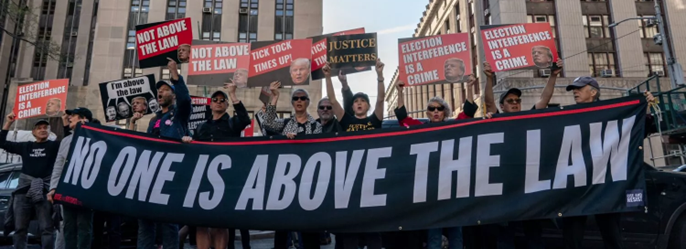
‘Hands Off Our Courts’: California Attorneys Rally Against Trump Administration
On May 1, 2025, attorneys across California rallied in defense of judicial independence as part of the national Law Day of Action. In cities like San Francisco, Los Angeles, and Sacramento, lawyers gathered to oppose …
These judges ruled against Trump. Then their families came under attack
A new Reuters investigation has uncovered a disturbing wave of threats and harassment directed at U.S. federal judges and their families after rulings against the Trump administration. At least 11 judges and their relatives have …