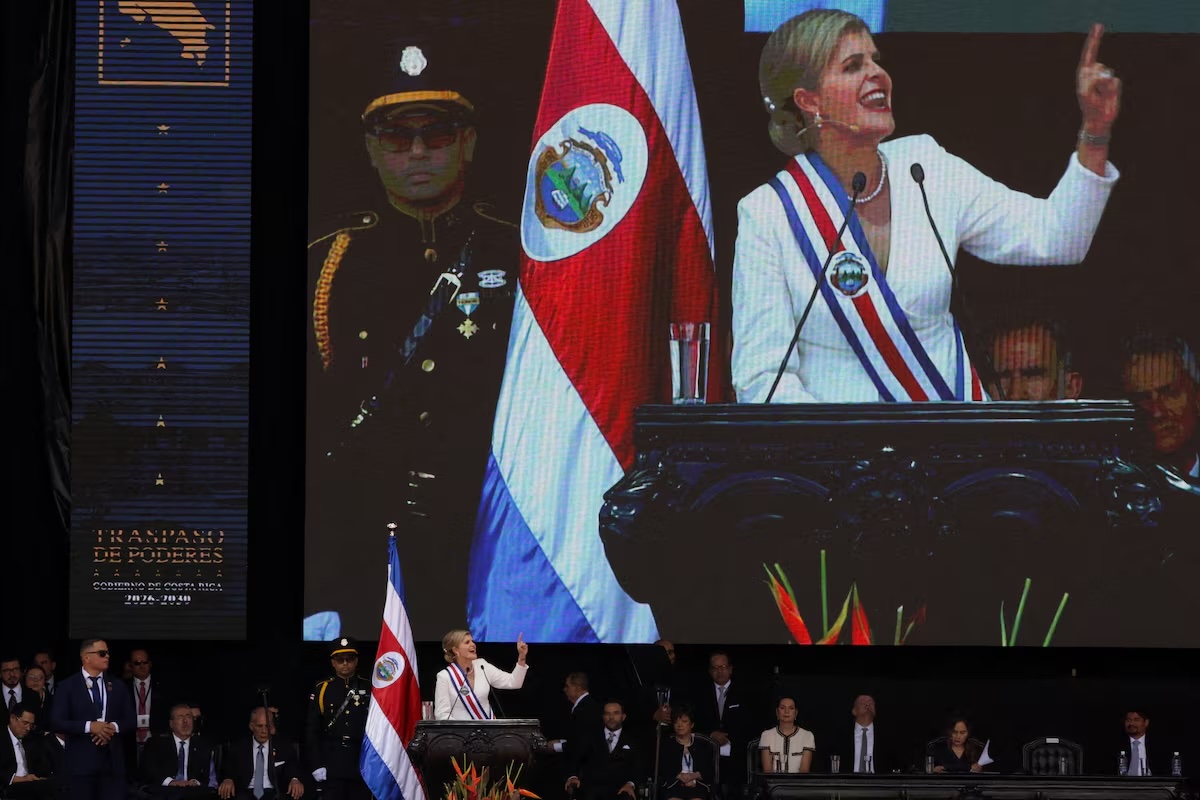
Costa Rica’s new president clashes with judiciary over tackling drug violence
Two months into her presidency, Costa Rica’s Laura Fernández is locked in a standoff with the country’s judiciary that Reuters reports is stalling any coordinated state response to drug-related violence in a nation once known for its stability. The dispute centres on steep budget cuts imposed on the courts and a legislative proposal to shift the power to appoint the attorney general from the Supreme Court to Congress; tensions escalated when Fernández accused the judiciary of being thoroughly infiltrated by organised crime and faulted the courts for blocking the hardline security policies her government favours, modelled on those of El Salvador’s Nayib Bukele. Judicial officials deny the corruption claims and have asked her to produce evidence, arguing that the cuts planned for 2026 and 2027 weaken democratic checks and actually impede the fight against crime; the head of the top criminal court characterised the pressure as part of a systematic campaign against the judiciary dating to 2022, under Fernández’s predecessor and party ally Rodrigo Chaves. Fernández, who campaigned on restoring order in a country of 5.2 million where roughly two people are murdered each day and the homicide rate has held near its 2023 record of 17.2 per 100,000, has called for the resignations of the attorney general and senior magistrates, none of whom have stepped down. Her security minister points to a conviction rate of just 38% in homicide cases as the core problem, while analysts frame the conflict as part of a wider Central American crisis in which cocaine trafficking exploits institutional weakness — and residents interviewed said the infighting has done nothing to make them feel safer.